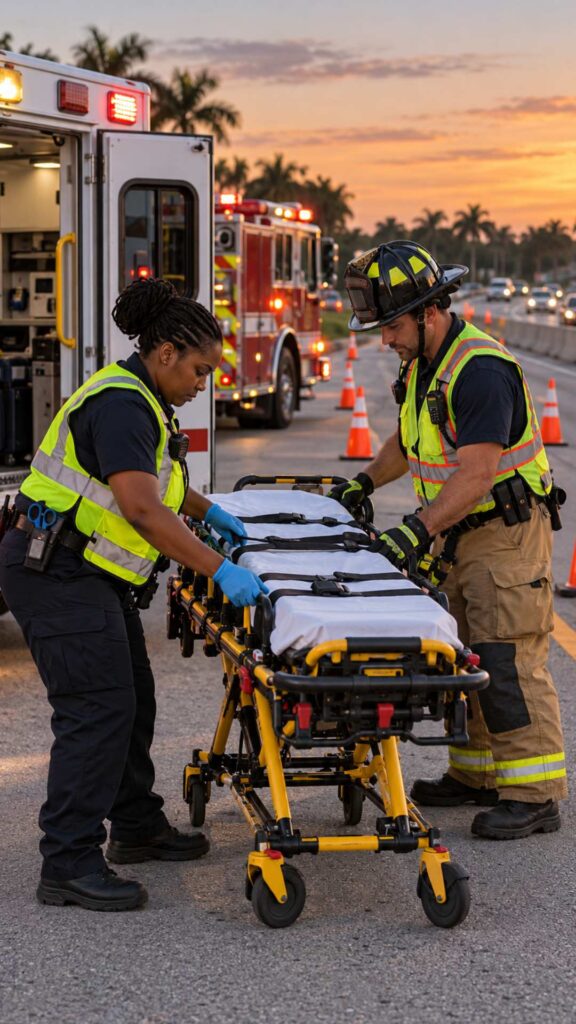
Slow Down Move Over: Protecting Crash Responders
Slow Down Move Over
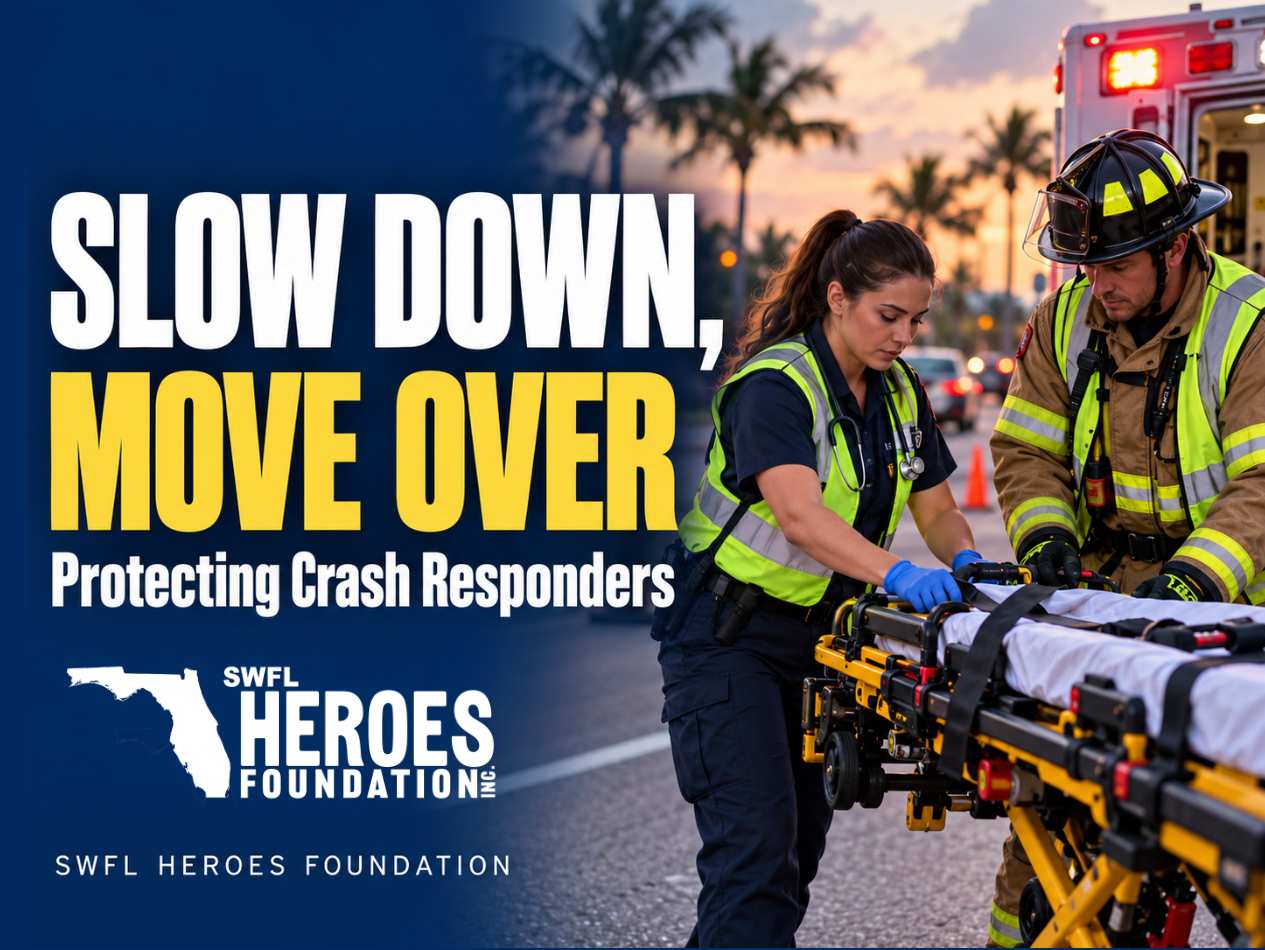
When firefighters arrive at a crash, their attention may be on reaching someone trapped inside a vehicle. EMTs and paramedics may be assessing injuries and preparing a patient for transport. Law enforcement officers may be protecting the scene, directing traffic, and working to prevent another collision.
Each responsibility requires concentration. Yet the people performing those tasks must also remain alert to vehicles passing their workplace.
Crash Responder Safety Week, November 2–6, 2026, brings attention to that exposure. This year’s message is “Slow Down Move Over. Lives Are on the Line” asks motorists to recognize the people behind the flashing lights and take action to protect them.
For Southwest Florida, it is a reminder that supporting first responders includes how we drive past the scenes where they work.
The Emergency Does Not Stop at the Edge of the Scene
A crash creates several demands at once: injured people need care, vehicles may obstruct traffic, and approaching drivers need warning.
For responders, that means the work extends beyond the damaged vehicles. Firefighters, EMS personnel, and law enforcement officers must carry out their assignments while the surrounding traffic presents an ongoing hazard. Tow operators and transportation personnel join that effort as vehicles are recovered and the roadway is cleared.
NIOSH identifies distracted, impaired, and drowsy drivers among the threats facing people working beside traffic. It emphasizes training, scene protection, and coordination to reduce the risk of responders being struck.
A person providing patient care or managing an emergency should have room to do that work. Motorists help provide it by responding to the scene early and following the law.
What Moving Over Means for the People Doing the Work
From behind a windshield, a roadside scene may appear to be a collection of parked emergency vehicles. Inside that scene, people are making decisions, communicating with one another, and performing tasks that may leave little room for error.
An ambulance represents a crew preparing to care for or transport someone. A fire apparatus may be supporting rescue operations and helping protect the work area. A patrol vehicle may be part of the effort to warn approaching traffic and manage access to the scene.
Crash response is a coordinated operation involving fire and rescue, EMS, law enforcement, towing and recovery, and transportation personnel. Protecting that operation helps responders assist the people who called for help and reduces the risk of a secondary crash.
Slow Down Move Over. Giving responders space is a practical way to support their work at the moment they need it.
Florida’s Move Over Law · Slow Down Move Over
Florida’s Move Over requirements apply to specified roadside situations involving emergency vehicles and certain service vehicles. They also cover disabled vehicles displaying warning or hazard lights, using emergency flares or signage, or having one or more people visibly present.
When approaching a covered roadside situation:
On a road with two or more lanes traveling in your direction: Leave the lane closest to the stopped vehicle as soon as it is safe.
If you cannot safely move over, or you are on a two-lane road: Reduce your speed to 20 mph below the posted limit when the limit is 25 mph or higher.
If the posted limit is 20 mph or lower: Travel at 5 mph.
Follow a law enforcement officer’s directions when provided.
Do not force a lane change into occupied traffic. When a safe opening is unavailable, the required slowdown still applies.
Slow Down Move Over · Help Before You Reach the First Emergency Vehicle
Responders need motorists to recognize an incident while there is still time to react safely.
Look ahead. Flashing lights, stopped vehicles, and slowing traffic are reasons to assess what is happening and prepare.
Reduce speed early. Waiting until you are beside a responder leaves less time to respond to changing conditions.
Move over safely. Check surrounding traffic, signal, and change lanes when there is a safe opening.
Keep your attention on driving. Watching the rescue, looking for crash damage, or recording the scene takes attention away from the road.
AAA recommends slowing early, moving over when safe, and passing with extra caution. Its guidance also emphasizes driving sober and avoiding distraction and drowsiness.
For the people working at the scene, these decisions can affect the conditions under which they must do their jobs.
For First Responders: Roadside Safety Is Part of the Response
First responders train to recognize hazards, make decisions under pressure, and work within a team. At a roadway incident, those responsibilities include protecting personnel from moving traffic.
NIOSH recommends traffic incident management training, appropriate high-visibility clothing and protective equipment, coordinated vehicle placement, and traffic-control measures. It also recommends reducing unnecessary exposure on the traffic-facing side of vehicles. The equipment and procedures used must fit the incident and the responder’s assignment.
Preparation also belongs at the organizational level. NIOSH calls for roadway-response procedures, interagency planning, and training for personnel working near traffic. Clear coordination helps departments establish how the scene will be managed and protected.
These precautions require attention even when the immediate needs of a patient or crash victim are urgent. They help protect the people providing care and keep the response functioning.
Motorists remain responsible for their own actions. Professional training cannot make an inattentive driver safe.
Preparing Future First Responders for the Whole Job
For students entering fire, EMS, and law enforcement training, the desire to help people is an important starting point. Becoming dependable in that role also means learning how to protect yourself and work safely with others.
A roadway incident shows how closely those responsibilities are connected. Responders must understand their own assignments, communicate with other disciplines, and recognize dangers that may continue while care or rescue work is underway.
Crash Responder Safety Week encourages completion of National Traffic Incident Management Responder Training, reinforcing that safe roadway response is a skill developed through education and practice.
SWFL Heroes Foundation supports aspiring first responders through educational scholarships. That preparation leads toward careers requiring judgment, courage, and a sustained commitment to other people.
Supporting First Responders Includes Protecting Them
People often express appreciation for first responders after an emergency. Passing an active crash scene offers an immediate opportunity to put that appreciation into action.
The firefighter, officer, EMT, or paramedic beside the road is there to carry out a responsibility. They deserve the space to perform it and the opportunity to return home afterward.
As Crash Responder Safety Week approaches, make the commitment specific: watch ahead, put the phone away, move over when safe, and slow down as required.
For the people answering the call, that is support they can use.
Join the mission through your gift of any amount.
We value the next generation of leaders by providing scholarships and educational support to our future community heroes.
Let’s do this together! Your gift of any amount is appreciated.